




Table of Contents
- What Defines Premium Coffee Quality?
- Start with the Beans: Visual Inspection
- Understanding Specialty Coffee Grading Standards
- Coffee Roast Date Importance: Why Freshness Rules
- The Sensory Test: Aroma and Fragrance
- Tasting Notes in Coffee: A Home Cupping Guide
- How Origin and Processing Shape Quality
- Common Mistakes to Avoid When Buying Coffee
- Frequently Asked Questions
Last Updated: September 5, 2026
Premium coffee is a measurable standard of bean health, roast precision, and flavor clarity that you can verify at home without a lab. This guide from Masaba Coffee, which works directly with farmers in Uganda, shows you what to look for, smell, and taste.
The real indicators are visual consistency, a recent roast date, and a balanced cup profile. Below, we walk through a sensory evaluation you can perform with basic kitchen equipment, the grading standards used by the specialty trade, and common mistakes that lead shoppers astray.
What Defines Premium Coffee Quality?
Premium coffee quality is the result of three converging factors: flawless bean cultivation, precise processing, and roasting that preserves the bean's inherent character. A coffee can only be called premium when it exhibits no defects, has a clearly defined origin, and delivers a complex flavor profile that reflects its terroir.
The term "premium" gets applied loosely to supermarket blends that would fail basic grading. True quality shows up in the bean's density, the uniformity of the roast, and the absence of off-flavors like sourness, rancidity, or a papery taste.
Specialty coffee represents the top tier of this quality scale. It is graded at 80 points or higher on the cupping form used by the Specialty Coffee Association's protocols, which evaluates fragrance, flavor, aftertaste, acidity, body, and balance.
Start with the Beans: Visual Inspection
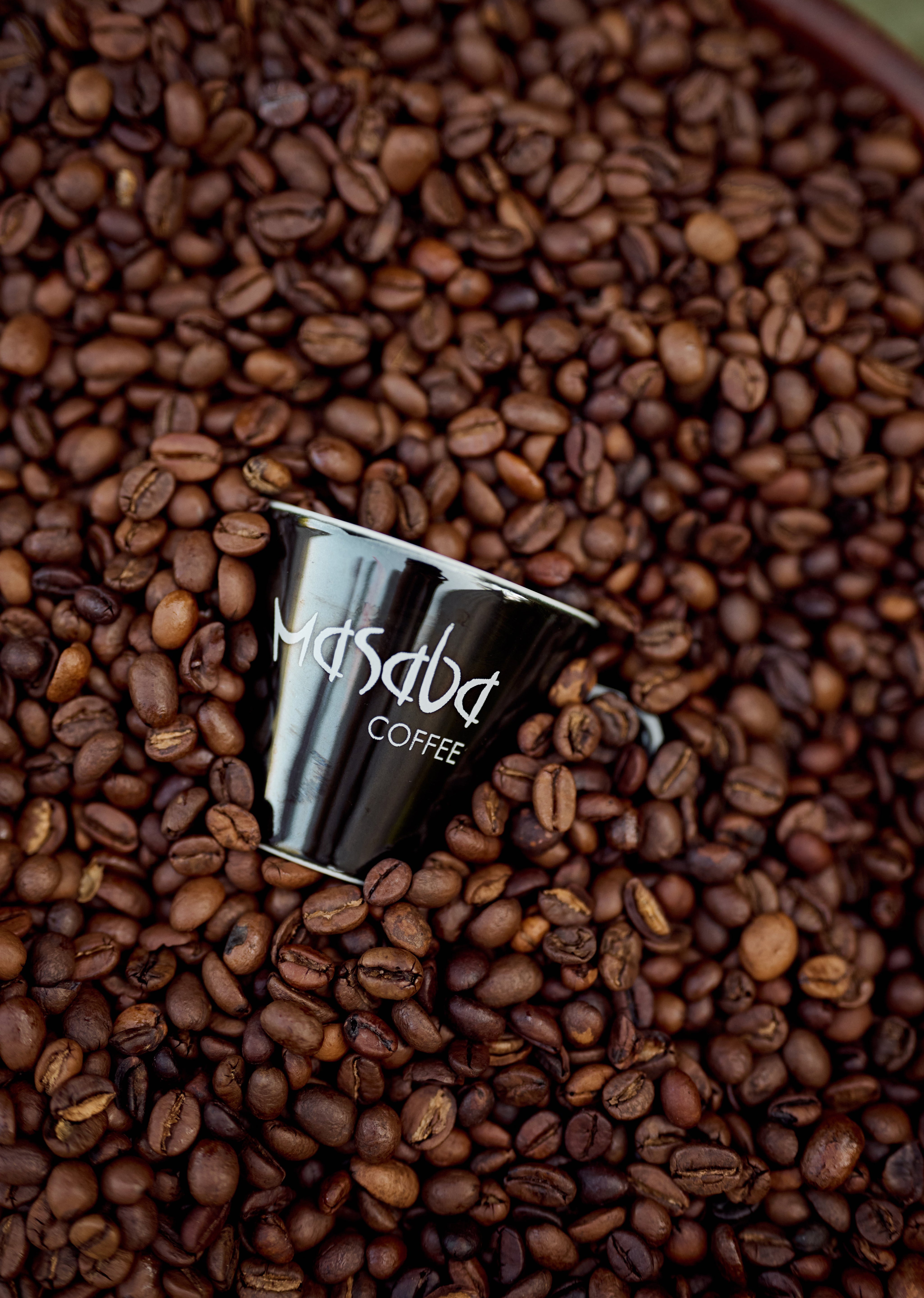
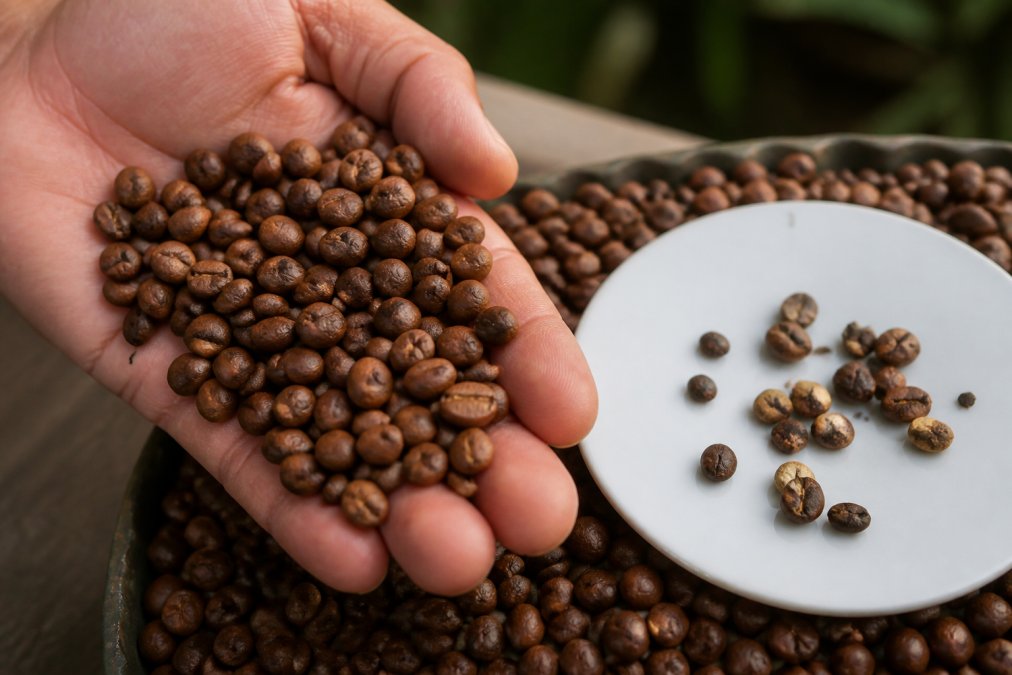
A quick visual inspection tells you more about quality than any tasting note on the bag. Premium beans should look uniform in size, color, and surface texture, indicating that they were harvested ripe and sorted carefully.
Pick up a handful and examine them in natural light. High-quality arabica beans will have a consistent brown color with a smooth, matte finish. If the beans look oily and shiny, they are either dark-roasted or past their peak freshness, as oils migrate to the surface over time. Shiny beans are not necessarily bad, but they signal an older roast that has lost its aromatic complexity.
Spotting Defects and Quakers
Defects are physical flaws that ruin the flavor of an entire batch. The most common ones you can spot by eye include broken or chipped beans, beans with holes from insect damage, and shriveled, lightweight beans that look like crumbs.
Quakers are underripe beans that roast lighter than the rest of the batch because they have less sugar content. They stand out as pale, peanut-colored beans mixed in with the darker roasted ones. A single quaker can make a cup taste grassy or baked. Premium roasters sort these out before packaging, so finding more than a couple in a bag suggests inconsistent sourcing or sloppy quality control.
Understanding Specialty Coffee Grading Standards
Specialty coffee grading standards provide an objective framework for what many people call premium coffee. The system assigns scores across multiple sensory attributes, and only coffees scoring 80 or above on a 100-point scale earn the specialty designation.
The evaluation covers fragrance, flavor, aftertaste, acidity, body, balance, and uniformity, with deductions for defects. Coffees scoring 85 to 89 are considered excellent, while those above 90 are rare and highly sought after. This scoring system is the industry's shared language, allowing roasters and buyers to communicate precisely about what a coffee offers.
For the home buyer, you do not need a cupping form to benefit from these standards. Look for bags that mention a cupping score or the origin region. A roaster confident enough to print a score is signaling that the coffee passed rigorous sensory analysis rather than just a visual check.
Coffee Roast Date Importance: Why Freshness Rules
The coffee roast date importance cannot be overstated; it is the single most reliable indicator of potential quality you can check on a bag. Coffee is a perishable product, and its volatile aromatic compounds begin degrading immediately after roasting.
Premium coffee should be consumed between 4 and 14 days after roasting. In the first few days, the beans release carbon dioxide and the flavors are still developing. After two weeks, the delicate flavor notes fade noticeably, and after a month, the coffee tastes flat and stale regardless of how good the beans originally were.
Always look for an explicit roast date on the packaging. A "best before" date is not a substitute, as it tells you nothing about how long the coffee has been sitting on a shelf. If a bag does not list a roast date, the roaster is likely not prioritizing freshness, which is a red flag for quality.
The Sensory Test: Aroma and Fragrance
To genuinely identify premium quality, you need a structured sensory evaluation that isolates the coffee's volatile compounds at two distinct moments: the dry fragrance and the wet aroma. This is the same two-stage protocol used in professional cupping, replicable with a simple kitchen setup.
Step 1: The Dry Fragrance Test
Grind 15 grams of coffee to a coarse consistency, think sea salt, not powder. Place the grounds in a wide, shallow bowl and immediately cup your hands over the top to trap the escaping gases. Bring the bowl to your nose and inhale deeply through your nose, then take three short sniffs. This sequence forces you past the initial blast of roast aroma and into the underlying bean character.
What you are evaluating is not just whether it smells 'good' but the specificity of the scent. A premium coffee will present a clear, identifiable note, stone fruit, jasmine, dark chocolate, or toasted nuts. A generic coffee smells only of 'coffee' or, worse, of roast. If you cannot name at least one distinct note, the bean's intrinsic character has likely been flattened by over-roasting or age.
Step 2: The Wet Aroma Test
Pour hot water (just off the boil, around 93°C) over the grounds until they are saturated. Do not stir. Let the coffee steep for four minutes. A crust will form on top. Break this crust with a spoon, and as you do, put your nose directly over the bowl. This is the moment of maximum aromatic release.
The wet aroma should be clean and fragrant. Professional cuppers score this phase for complexity and sweetness. A premium lot will often smell like caramelized sugar or fresh bread. A defective or old lot will betray itself here: a sour, fermented smell indicates over-fermentation during processing; a rubbery or burnt smell points to roasting errors; a papery or dusty smell signals age.
The 'Off-Note' Checklist
To make this test objective, run the aroma through a quick defect checklist. If you detect any of the following, the coffee fails the premium test regardless of its origin story:
- Sour or fermented: Over-fermentation in the washing process or a defect in the cherry.
- Rubbery or burnt: Over-roasting, often used to mask low-grade beans.
- Musty or moldy: Poor drying or storage conditions, a serious quality failure.
- Papery or cardboard: The coffee is stale, past its peak flavor window.
- Medicinal or chemical: Contamination during processing or packaging.
Why This Two-Stage Test Matters
This structured approach transforms a subjective impression into a diagnostic tool. The dry fragrance tells you about the bean's inherent quality and roast level; the wet aroma tells you about processing and freshness. A coffee can pass the dry test and fail the wet test, isolating the variable causing the quality drop.
Tasting Notes in Coffee: A Home Cupping Guide
Tasting notes in coffee describe the flavors and aromas you perceive, and learning to identify them is the core skill of quality assessment. A home cupping session is the most reliable way to evaluate a coffee because it removes the variables of brewing equipment and technique.
To cup at home, coarsely grind about 15 grams of coffee and place it in a bowl. Smell the dry grounds, then add hot water just off the boil and let it steep for four minutes. Break the crust that forms on top with a spoon, smell the released aroma, and then skim off the grounds. Once the coffee cools slightly, slurp it from a spoon to aerate it across your palate.
Premium coffee should taste sweet and balanced, with a pleasant acidity that is bright but not sour. The body, or mouthfeel, should feel substantial rather than watery or thin. Pay attention to the aftertaste; a clean, lingering sweetness indicates quality, while a bitter or metallic finish points to defects or over-roasting.
How Origin and Processing Shape Quality
The origin of a coffee and its processing method are the two biggest factors determining its flavor ceiling. Single origin coffees from high altitudes tend to have denser beans and more complex flavor profiles because the slower growth develops more sugars.
Altitude plays a direct role in quality. Beans grown at higher elevations mature more slowly, producing a harder, denser bean with more pronounced acidity and nuanced flavor notes. Low-altitude coffees grow faster but often taste flat and lack the bright, fruity character that specialty buyers prize.
The processing method also leaves a distinct signature. Washed process coffees, where the fruit is removed before drying, produce a clean, bright cup that highlights the bean's intrinsic character. Natural process coffees, dried inside the fruit, yield heavier body and bold, fruity flavors. Honey process sits between the two. Recognizing these differences helps you choose coffees that match your palate, and it explains why two arabica coffees from different regions can taste nothing alike.
Common Mistakes to Avoid When Buying Coffee
The most common mistake is buying coffee without a roast date. Another frequent error is assuming dark roasts indicate quality; dark roasting often masks defects in low-grade beans because it destroys the delicate flavors that reveal a coffee's origin.
Many shoppers also overlook the importance of whole beans. Pre-ground coffee loses its volatile aromas within minutes, so even a premium bean tastes mediocre once ground and bagged. Buy whole beans and grind them just before brewing to preserve the flavor compounds.
Finally, do not store coffee in a transparent container on the counter. Light, heat, and oxygen accelerate staling. Keep beans in an opaque, airtight container away from direct sunlight, and buy in quantities you will use within two weeks. Proper storage protects the quality you paid for, and guidance on coffee storage and freshness confirms that oxygen exposure is the primary enemy of flavor stability.
The Hidden Variable: Water Chemistry
Even with fresh beans, correct grind, and proper storage, your cup can taste mediocre if your water is wrong. Water makes up over 98% of your brewed coffee; it is an active ingredient that extracts flavor compounds, not a neutral solvent.
The Specialty Coffee Association has established a water quality standard for brewing: a total dissolved solids (TDS) range of 150-250 parts per million (ppm), with an ideal around 150 ppm (sca.coffee). This mineral content is what allows water to extract the full range of flavors from the coffee. Water that is too soft, low TDS, like distilled or heavily filtered water, produces a flat, sour, and weak extraction because there are not enough minerals to pull the acids and sugars out of the bean. Water that is too hard, high TDS, common in areas with significant limestone, makes coffee taste bitter, chalky, or salty, as the excess minerals bind to and mute the delicate flavor compounds.
The Practical Fix
Start with your tap water and brew a cup. If it tastes flat or bitter despite fresh, high-quality beans, your water is the likely culprit. The simplest fix is a basic carbon filter pitcher, which removes chlorine while retaining beneficial minerals. For precision, a cheap TDS meter (around 20 CHF) checks mineral content: below 100 ppm, add specialty coffee brewing minerals; above 250 ppm, blend with a small amount of distilled water.
The 'Coffee Tastes Bad' Diagnostic
If your coffee consistently tastes off, run this quick diagnostic before blaming the beans:
- Is it sour or salty? Your water is likely too soft, or your brew temperature is too low.
- Is it bitter or chalky? Your water is likely too hard, or your roast is too dark.
- Is it flat or weak? Your water is likely too soft, or your grind is too coarse.
- Is it astringent or drying? Your water is likely too hard, or your brew time is too long.
Isolating water chemistry as a variable lets you move beyond the bean and take control of the entire brewing system.
Frequently Asked Questions
How can you tell if coffee beans are high quality?
High-quality beans look uniform in size and color, feel dense, and have a matte finish without excessive oil. They smell intensely aromatic, whether fruity, nutty, or floral. After roasting, they should be free of defects like quakers, which are pale and brittle beans that taste sour or papery. The most reliable way to confirm quality is to check the roast date and buy from a roaster that provides detailed origin and processing information on the label.
What is considered a premium coffee?
Premium coffee usually refers to beans that score 80 points or higher on the Specialty Coffee Association (SCA) 100-point scale. This specialty coffee grading standard evaluates aroma, flavor, aftertaste, acidity, body, and balance. Premium beans are typically single origin, grown at altitude, and processed with care, whether washed, natural, or honey. The roast profile is designed to highlight the bean's natural characteristics rather than mask defects, and the packaging always includes a clear roast date.
Does the roast date impact coffee quality?
The coffee roast date importance cannot be overstated. Coffee is a perishable product; it tastes best between 5 and 25 days after roasting. After this window, the beans slowly lose their volatile aromatic compounds, resulting in a flat and stale cup. Always look for a 'roasted on' date on the bag. If you only see a 'best before' date, the roaster is likely hiding the coffee's true age. Buy from a source that roasts regularly and ships promptly.
What should I look for on a coffee bag label?
A transparent label reveals premium quality. Look for the roast date first; it should be within the last few weeks. Then check for the origin, ideally a specific farm or cooperative rather than just a country. The label should state the processing method, such as washed or natural, and often includes altitude. Finally, look for tasting notes like 'dark chocolate' or 'jasmine.' These details signal a roaster committed to traceability and are the first step in identifying premium coffee quality.

